
Madison County Arrest Log
The sheriff's site posts no narrative blotter. No calendar archive either. The closest official source is structured data tied to the MCSO Inmate Search. Records span many booking dates. They stretch across months in 2026. That spread is real, but it promises little. A fixed weekly window, a complete arrest list, and a set retention period are all off the table. The feed may keep a booking after release, and it can mix arrests from several agencies whose detainees enter the regional jail. Check current custody at Tri-County, and look to the court docket for outcomes.
Madison Multi-Date Arrest Data
The official application leans on backend plumbing. A structured MCSO data feed pairs with a related vendor endpoint. That explains why bookings from several dates sit behind a public-facing search, and the agency-branded inmate search remains the clearest stop for an ordinary lookup. Backend data is not a separate public archive unless MCSO labels it that way. Work backward by booking date. Compare identifiers. A record can name the arresting agency and show an image reference yet still prove no current custody. Duplicate names appear. Booking numbers and jail IDs separate them. The official multi-day feed documents that structured source.
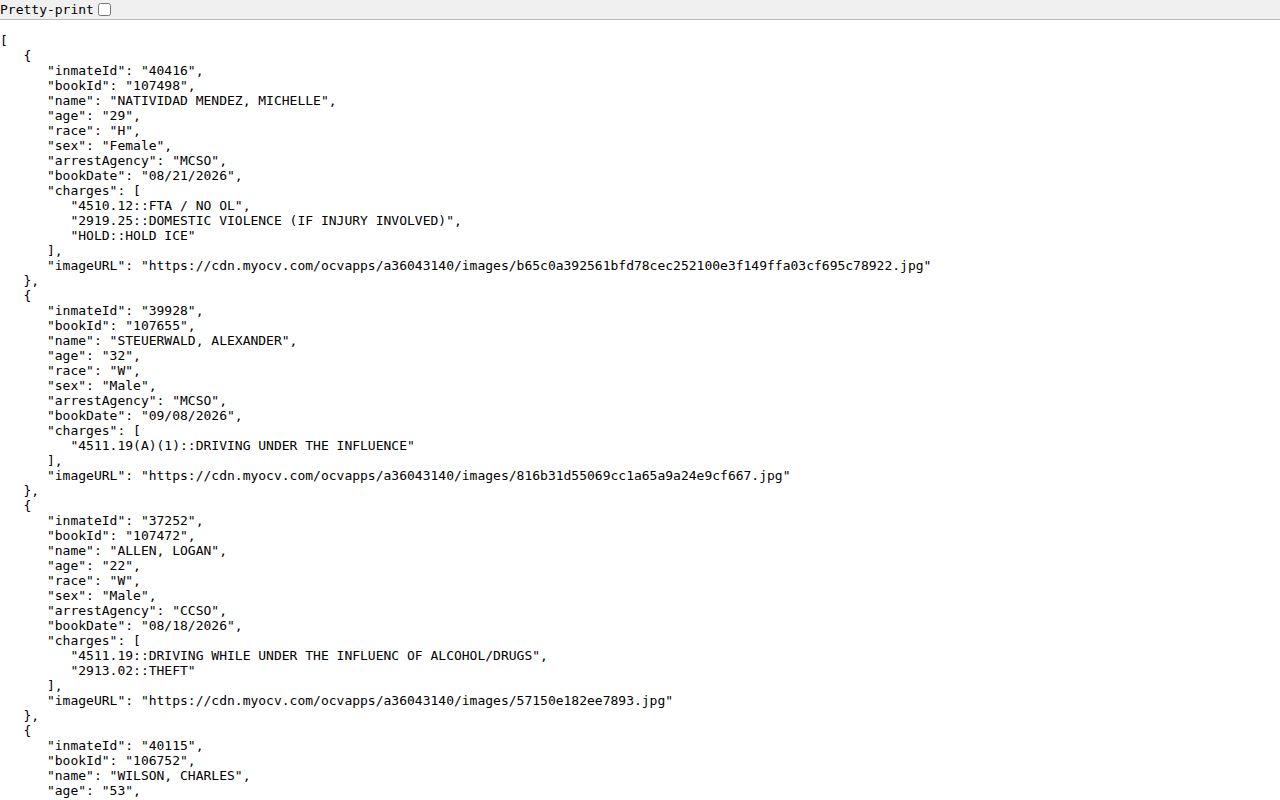
That archived copy shows the source format. It does not promise the same entries remain online.
Read Madison Arrest Records
Treat the log as a trail, not one answer. Start at the official MCSO interface. Confirm current custody separately, and turn to court sources only for what happened after a case was filed.
- Search the MCSO Inmate Search by name and open the matching detail record.
- Sort the likely matches by booking date, then compare booking number, jail ID, demographics, and agency.
- Check the Tri-County roster if the question is whether the person remains in regional custody.
- For an older record that has rolled off, send a narrow request to MCSO or the arresting police department.
- Use the relevant court docket for amendments, dismissal, plea, trial, or disposition.
A same-day question is narrower. The Daily Arrest Report tracks fresh intake and visibility lag, while this weekly log follows records across dates and into archives.
Madison Arrest Log Fields
A booking record is not a prose police report. It gives fields, read in context. Some fields sit blank, and none of them promise the record is current.
| Entry field | Meaning and limit |
|---|---|
| Name, age, race, sex | Identity details that still require a cross-check. |
| Booking date | Date linked to intake, not necessarily the incident time or court filing date. |
| Booking number and jail ID | Record keys useful for follow-up with the custodian. |
| Arresting agency | The office that supplied the arrest, which may be MCSO or a city department. |
| Charge or charges | Accusations as entered at booking. |
| Image field | May point to an official booking image; no universal display or retention rule was found. |
A booking date proves a date, not a week in custody. Bond, release, transfer, or later state placement can change where a person shows up next.
Madison Calls Versus Arrests
MCSO keeps calls and arrests on separate tracks. The Calls for Service page logs agency activity history. It is not a booking list. A call can close with no arrest, and a booking can grow from an event the activity listing never spells out. The official Calls for Service page is why that source label matters.
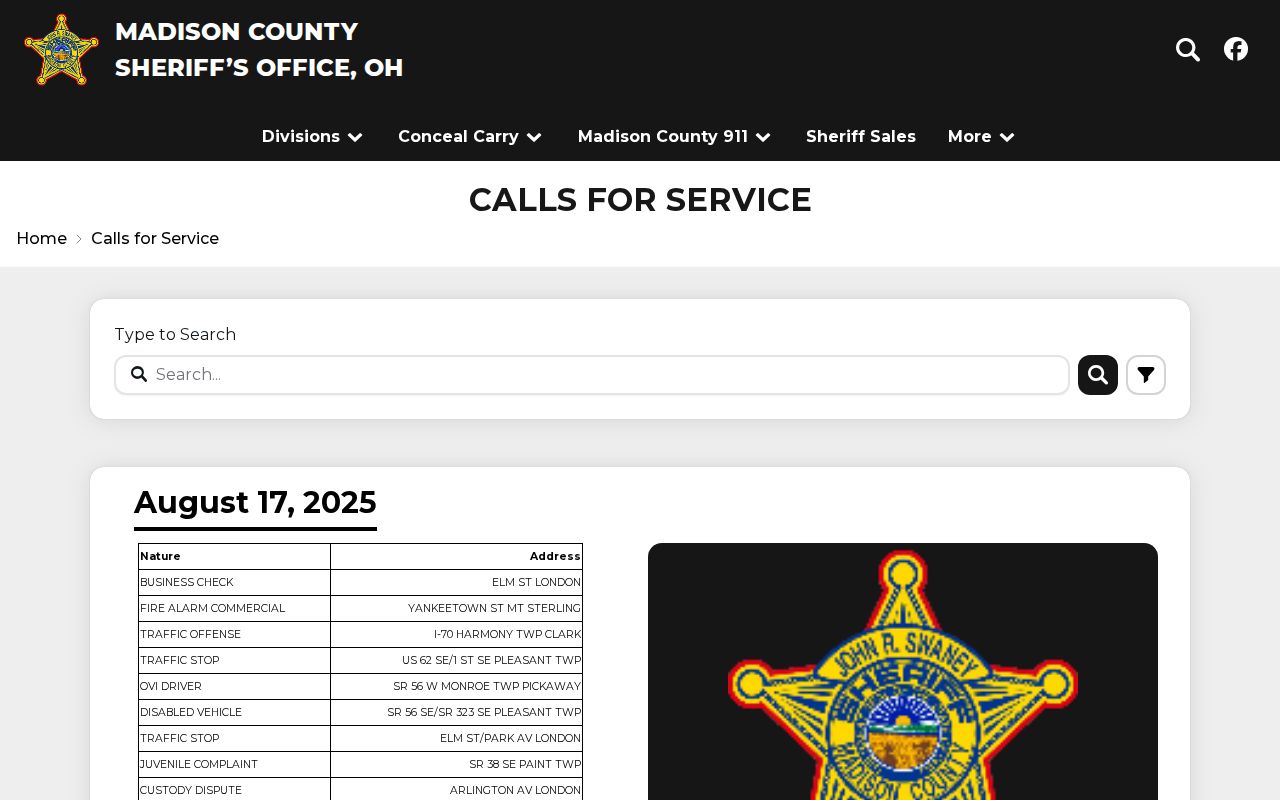
Treat it as context for the incident, and confirm any Madison County arrest through MCSO, Tri-County, or the court.
Madison Arrest Blotter History
Local papers once carried this beat. The Madison Messenger printed London police blotter material in dated issues. A March 8, 2020 archived issue holds a full London blotter, and other issues keep law-enforcement summaries. That is reporting history. It is issue-based. It is not a live feed. It sets no present photo schedule either. Madison Journal runs local-news and e-edition features but lists no county booking section, and the old outlet ecosystem may not publish new issues in the same form. Treat every newspaper source as secondary and possibly stale, with the historical Madison Messenger blotter preserving that format.

It should never be used to confirm present custody or a final case result.
Unofficial Madison Arrest Archives
Commercial sites keep copies. Official rosters change, and those pages often stay. Busted Newspaper's Tri-County section mixes Champaign, Madison, and Union records. RecentlyBooked's Madison page may carry a facility label that misses the current regional structure. Mugshots.com runs an Ohio route touching Madison, though its county page is unreliable. None of them outranks MCSO, Tri-County, or a court. Copied images linger. A charge can outlast release or court action online. Use them to find the official record. When the live county source drops an entry, a direct request works better.
Request Older Madison Arrest Logs
Online depth and legal retention are two different things. The live system served records from May through September 2026, yet no Madison County agency promises that span or names a maximum. Ohio History Connection explains that local retention schedules and RC forms govern approval, disposal, and transfer. Madison publishes no schedule for booking cards or photographs.
Want an older arrest log? Send a narrow request. Address it to MCSO Records & Reports, Tri-County, or the agency that handled the arrest. Name the person, the date range, the record series, and the format you want. Ask whether the booking record is retained, destroyed under an approved schedule, transferred, or held by a vendor. If so, request the finding aid or transfer number.
Substitutes have limits. The Madison County Genealogical Society collections list Madison Messenger holdings, though a newspaper archive is not a jail archive. Ohio State Archives has no complete Madison booking-photo set. Neither one can certify who holds custody of an arrest record today.
Madison Arrest Records Stay Distributed
No single archive holds every Madison County booking. The trail is split. Pieces live in the MCSO application, its vendor-fed records, the regional current-custody roster, police and sheriff files, court dockets, old newspaper issues, and records moved under approved schedules. A saved result proves only what that source showed.
Connect records where you can. Use the booking number and jail ID. An arresting-agency label routes a report request to London Police Division, West Jefferson Police, Plain City Police, or MCSO. Tri-County handles jail-custody questions. Municipal Court or Common Pleas dockets carry the case after filing. If a state sentence follows, ODRC holds a separate offender record and may use a different official image.
This spread explains something else too. An online roll-off is not destruction. The arrest record may still sit with an agency, a vendor, or a transfer, or be restricted. Ask for the schedule item and disposal or transfer details when a custodian says the record is gone.
Compare Madison Arrest Dates
Several dates can attach to one arrest. The booking date marks the jail's paperwork. The incident itself can carry an earlier time, and a court filing can come later still. A newspaper may print its issue date instead. Treat all four as one date and you build a false timeline.
Write down each label. Sources rarely date things the same way. If an interface shows a UTC-style timestamp, do not quietly convert it into an exact local time. MCSO publishes no set posting hour, no holiday rule, and no promise that photographs and text arrive together. A vendor feed working overnight does not prove staff post each booking record without delay.
Weekend searches need extra room. Reach past a neat seven-day boundary when a record may have been entered late. Then confirm the event with the source agency. A multi-day log exists to catch arrests across dates, not to claim every record appeared on the day it was created.
Public Record Search
Sponsored Results